Opinion / Municipal Accountability
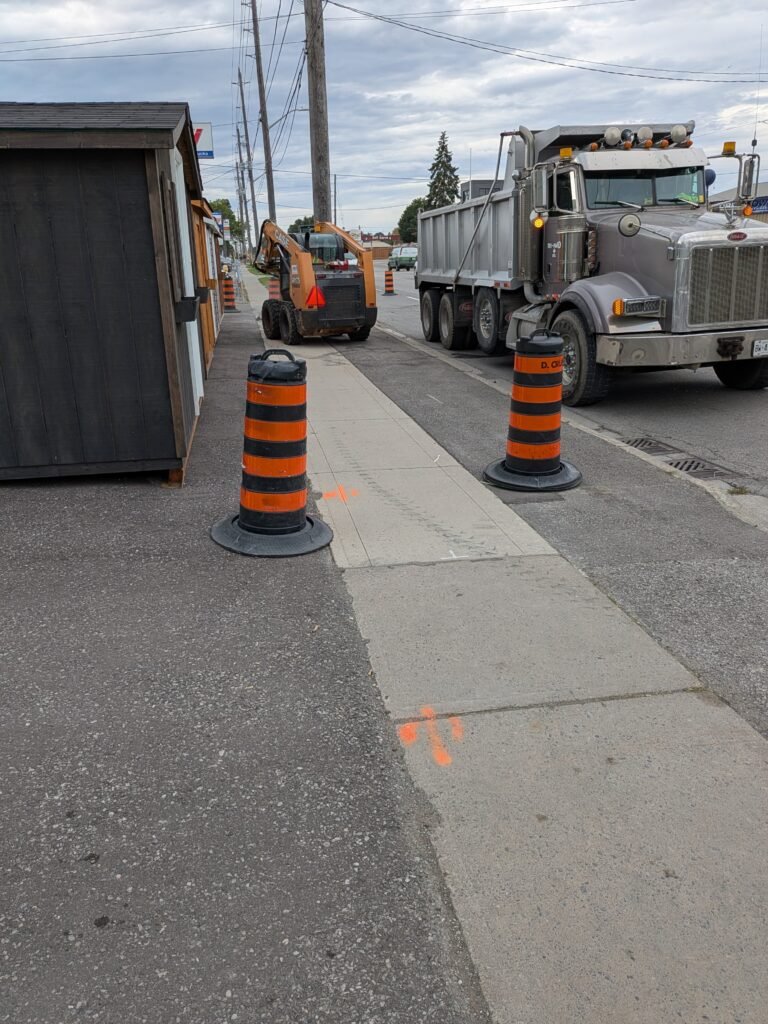
A report of renewed sidewalk work near 109 Bloor Street East in Oshawa deserves a documented answer from City Hall: is the work being paid for through a new municipal expenditure, or is a contractor correcting an earlier deficiency under warranty?
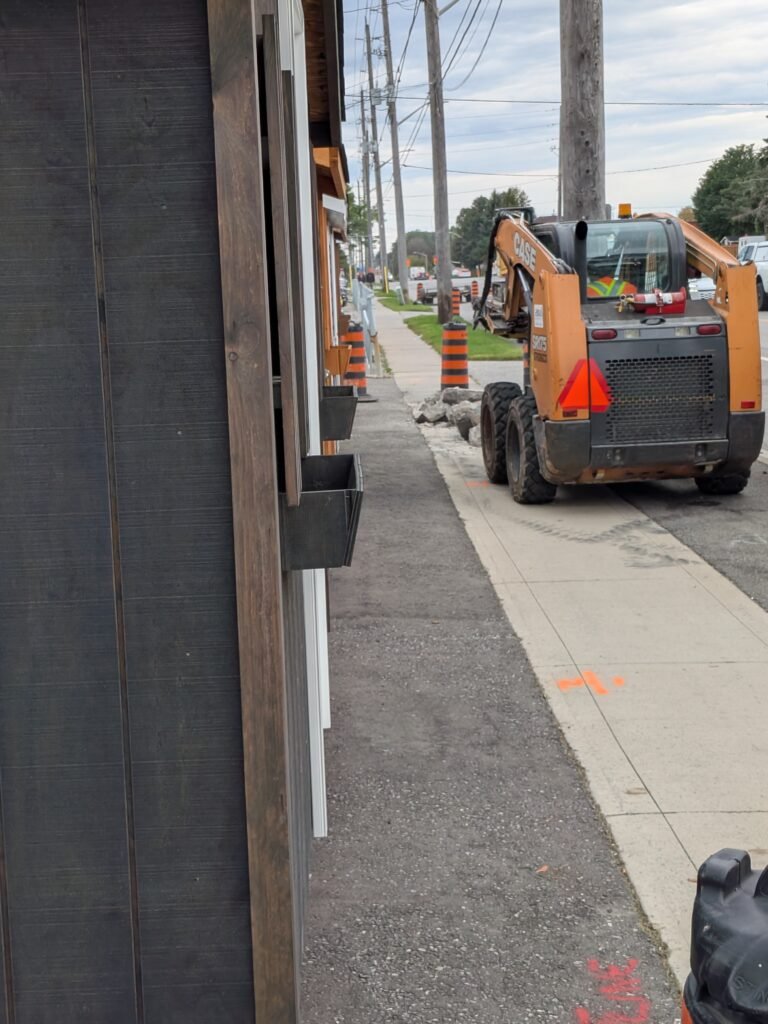
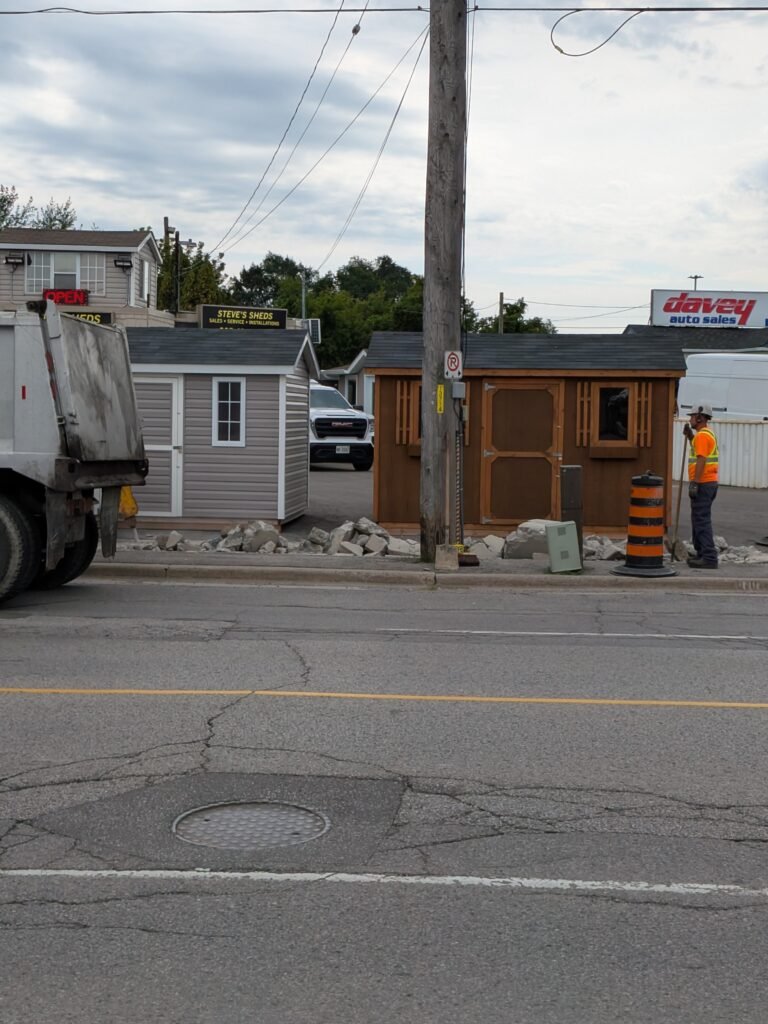
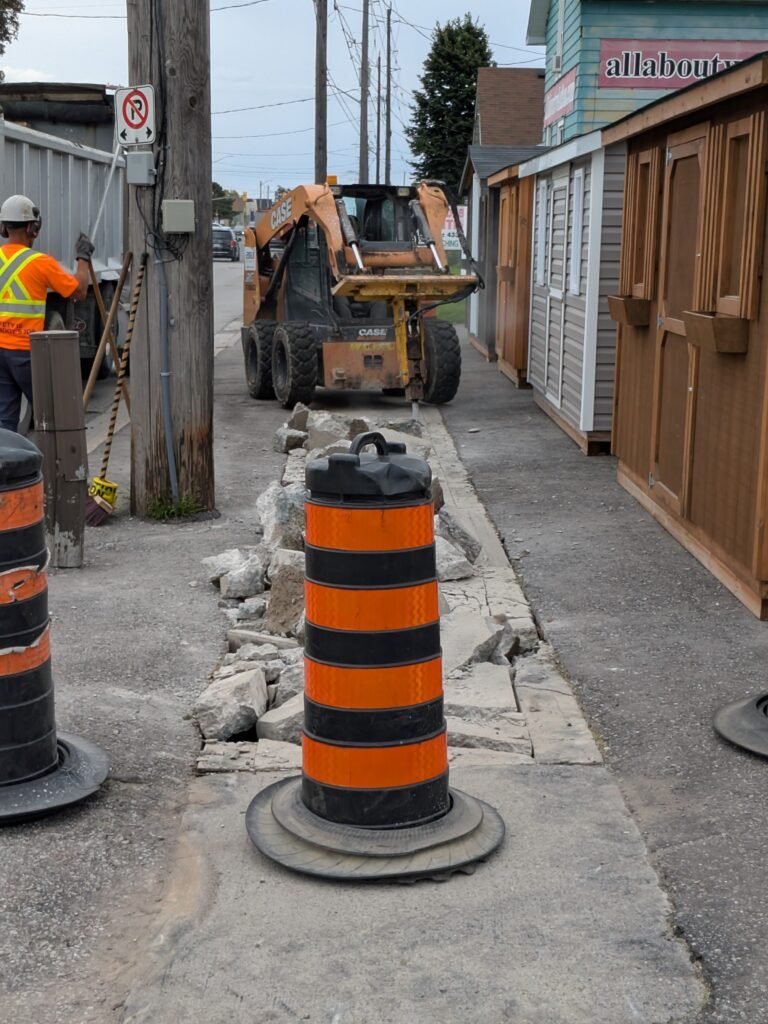
The report supplied to DurhamPoliticians.com says sidewalk in front of Steve’s Sheds is being removed after work was completed approximately two years ago, with “imperfections” reportedly cited as the reason. DurhamPoliticians.com has not independently confirmed the construction date, defect, contract, cost or payer. No contractor should be blamed without those records.
The official record
Oshawa’s 2023 Approved Capital Projects lists 109 Bloor Street East as a sidewalk replacement candidate. The entry identifies 20 metres and describes the deficiency as “Asphalt Overlay.” Steve’s Sheds publishes the same address as its Oshawa location.
The City’s sidewalk program says deficient slabs are selected through annual inspections. It cites trip-and-fall liability and the municipality’s legislated maintenance responsibilities as reasons for the program.
In its 2025 Capital and 2026 Capital Forecast, Oshawa budgets $500,000 in each year for sidewalk replacements. The document also provides construction-deficiency warranty periods: through Q4 2027 for 2025 work and Q4 2028 for 2026 work.
This does not establish that the Bloor Street work is a warranty repair. It establishes that warranty recovery is part of the City’s program and should be addressed in any public explanation.
Questions for municipal oversight
- When was the earlier work at or near 109 Bloor Street East completed, and under which contract?
- What engineering, accessibility or safety deficiency requires the current removal?
- Is a contractor paying under warranty, or is the City incurring a new cost?
- What is the value of the current work?
- How did the location rank against other sidewalk deficiencies identified through inspection?
Council members and residents should avoid assuming waste before the contract record is known. Enforcing a warranty would demonstrate responsible oversight. Paying twice could still have a legitimate explanation, but it would require transparent documentation.
The City can settle the issue quickly by publishing the work order, defect description, warranty status and payer. That would distinguish responsible warranty enforcement from a repeat taxpayer expense.
Bottom line: “Taxpayer waste” is not an established fact. The established facts justify asking who authorized the work, why it is required and who receives the bill.
Verification note: Official City documents and the business address were checked September 15, 2026. The reported age, “imperfections,” current scope, contractor and payer remain unconfirmed. This article will be updated if documentary information becomes available.